
Brick Waterproofing in NYC — Sealing, Repointing & Leak Repair
White chalky stains on the facade. Damp patches and bubbling plaster on the wall inside. A leak that appears with every wind-driven rain, then vanishes for weeks. That's not a roof problem — it's your brick wall drinking water. Tekno Construction waterproofs brick buildings across Yonkers, the five boroughs and Westchester County in the order that actually works: repoint the failed joints first, then seal the wall with a breathable water repellent that keeps rain out without trapping moisture in.
Free brick waterproofing assessment: (718) 772-8498 — or send photos of the staining, the crack or the damp interior wall on WhatsApp and we'll tell you where the water is getting in and what it takes to stop it. Every inquiry gets a response within 24 hours.
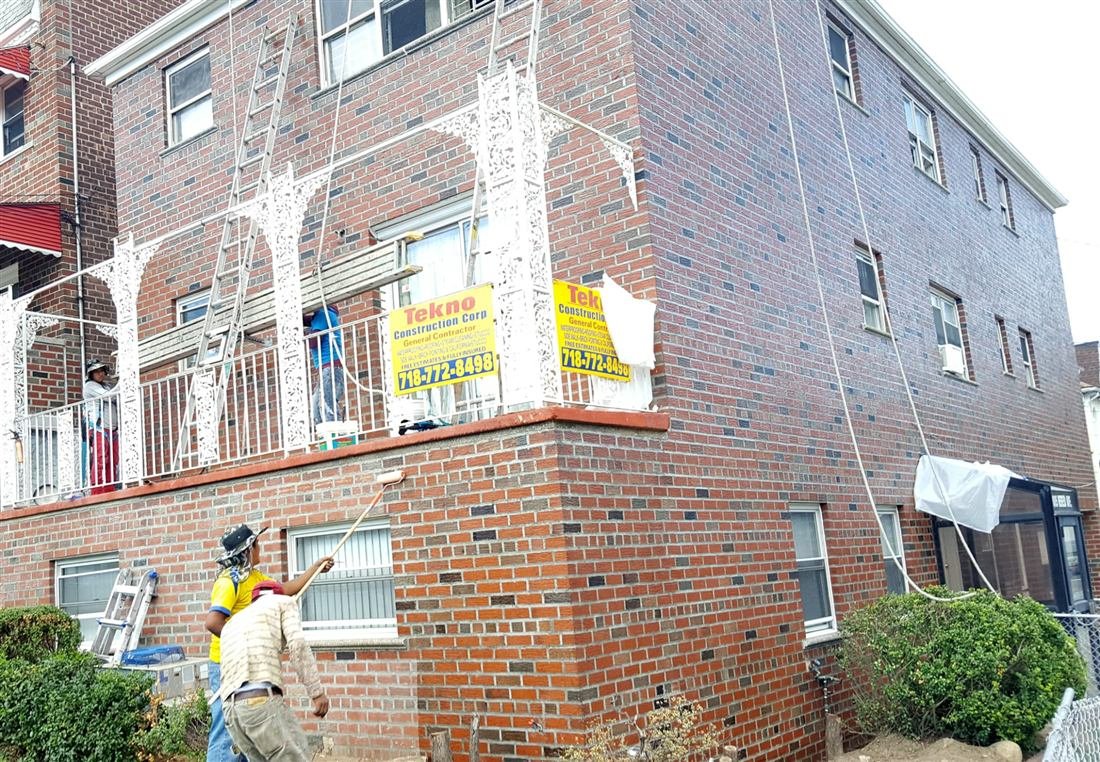
Why NYC brick buildings leak
Brick itself is rarely the culprit. On most of the leaking facades we inspect, the water is entering through everything around the brick:
- Failed pointing — mortar joints that have eroded, cracked or debonded after decades of weather. A wall can look solid from the sidewalk while every joint above the third floor is drinking at each rain.
- Hairline cracks — openings too fine to see from the street, yet wide enough for capillary action to pull water deep into the wall — where it travels and surfaces indoors somewhere entirely different.
- Parapets and copings — soaked from both faces and the top, the most weather-beaten masonry on the building. Open coping joints feed water straight into the wall below — many "roof leaks" are really parapet leaks.
- Wind-driven rain — New York storms don't fall politely downward. Rain driven horizontally against a tall, exposed facade forces water into openings ordinary rainfall never touches — it's why upper floors and corner exposures leak first.
We've written a full breakdown of the mechanics in our guide to why NYC brick buildings leak — but the short version: once joints and cracks are open, no surface coating will save the wall. The masonry must be made sound first.
The symptoms: efflorescence and ruined plaster
A wet brick wall announces itself in two places. On the outside, you see efflorescence — the white, powdery staining on brick that so many owners try to scrub off. Efflorescence is dissolved salts carried out of the wall by water as it evaporates from the surface. Cleaning it removes the stain; it does nothing about the moisture that delivered it. Recurring efflorescence on brick is a report card on moving water — every fresh bloom means the wall is still wet inside.
On the inside, the same water destroys finishes: plaster that bubbles and crumbles back to brown coat, paint that peels in sheets, staining that returns after every repaint, and the musty smell of a wall that never dries. Repainting is a losing game — interior plaster damage on an exterior wall is an exterior waterproofing problem, and it returns until the facade stops taking on water.
The right sequence: repoint first, then seal
This is where brick waterproofing goes wrong more often than anywhere else. A sealer — any sealer — is the last step, never the first. Our sequence:
- Make the wall sound. Failed joints are ground out and repointed with properly matched mortar, hairline cracks are routed and repaired, spalled brick is replaced, and open parapet and coping joints are rebuilt or resealed. This is masonry and brickwork discipline, and it's where the actual leak gets fixed.
- Let the wall dry. Sealing a saturated wall locks the moisture in. The masonry gets time to release the water it's holding before anything is applied.
- Apply a breathable water repellent. We use penetrating, vapor-permeable repellents — the siloxane/silane family — that soak into brick and mortar and make them shed rain while still letting vapor escape from inside the wall.
What we won't do is coat a leaking wall with film-forming sealers, glossy "waterproof" paints or heavy elastomeric coatings as a shortcut. A film that blocks vapor traps moisture inside the masonry — and in a Northeast winter, that trapped water freezes, expands and pops the faces off the brick. We've stripped more failed coatings than we can count — on brick, breathability isn't a preference, it's what separates a protected wall from one being destroyed under its own coating.
Where the damage goes beyond joints — deteriorated lintels, failing sills, eroded brownstone detail — the work ties naturally into our exterior restoration scope, so one contractor carries the facade from repair through sealing.
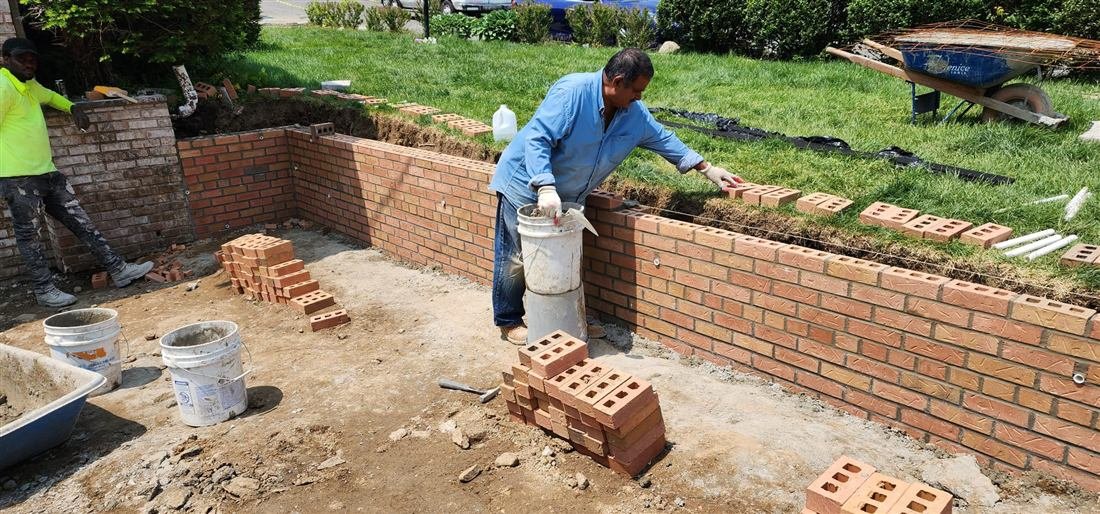
What we inspect at the free on-site visit
Exterior waterproofing in NYC starts with finding the actual entry point, not the spot where the water shows up. At the free assessment we go over:
- Mortar joints — sounded and probed for erosion and debonding, floor by floor — not just at eye level
- Cracks — mapped and traced to their cause, because sealing over a moving crack just relocates it
- Parapets and copings — joints, caps and the roof-side face — the most common hidden source we find
- Window perimeters and sills — failed caulk joints and back-pitched sills that funnel water into the wall
- Previous coatings — anything already on the wall that's trapping moisture or will reject a new repellent
- The interior evidence — where the plaster damage and staining sit, matched against the moisture path outside
You get the findings straight, a scope that fixes the cause, and a fixed written quote — not an estimate that grows once the scaffold is up.
Freeze-thaw: the New York multiplier
A wet brick wall in a warm climate is a nuisance. A wet brick wall in New York is a demolition project on a timer. Every winter brings dozens of freeze-thaw cycles, and each one turns the water inside saturated brick and mortar into expanding ice. That's what spalls brick faces, bursts mortar joints and crumbles parapets — and it's why brick sealing in NYC pays for itself in the masonry repairs it prevents. A dry wall simply doesn't freeze apart.
How pricing works
No two facades take on water the same way, so we don't guess over the phone and we never publish flat rates. We visit your building free of charge, inspect the wall up close, and hand you a fixed written quote — no obligation, and no revisions after the work starts.
Your price is determined by:
- Repointing scope — how much of the wall needs joints ground out and repointed before any sealing happens
- Repair items — crack repairs, brick replacement, parapet and coping work, caulking at windows and sills
- Wall area and exposure — the square footage being treated and how the facade takes weather
- Access — ladder work vs. scaffolding vs. rigging changes the setup significantly
- Permits and filings — where the access or repair scope requires them, we handle the DOB and city paperwork as part of the job
We respond within 24 hours and can usually schedule the visit the same week. Start with the quote form or message us on WhatsApp.
Where we work
From our Yonkers headquarters we run waterproofing and masonry crews across Yonkers, the Bronx, Manhattan, Brooklyn, Queens, Staten Island and Westchester County. The pre-war walk-ups and rowhouses that dominate this housing stock are exactly where pointing, parapets and sealing give out together — the walls we work on every week.
Frequently asked questions
What is the best way to waterproof a brick wall?
In the right order: repair first, seal second. Failed mortar joints are repointed, cracks repaired and parapet copings made sound — then, once the wall has dried, a breathable penetrating water repellent is applied so the masonry sheds rain while still releasing vapor. A sealer applied over open joints or a wet wall fails, because the water keeps entering behind it.
What causes efflorescence on brick, and how do I get rid of it?
Efflorescence is dissolved salt left behind when water moving through the wall evaporates at the surface. Cleaning removes the stain but not the cause — if it keeps returning, water is still traveling through the masonry. The lasting fix is stopping the water entry with repointing and breathable sealing; after that, the staining can be cleaned off and stays off.
Can I just paint a waterproof coating over leaking brick?
Please don't. Film-forming coatings and heavy waterproof paints block the wall's ability to release vapor, so moisture entering through any remaining opening gets trapped inside the brick. In freeze-thaw weather that trapped water spalls the brick faces off. Brick needs a vapor-permeable, penetrating repellent — and only after the joints and cracks are repaired.
Why does the plaster on my exterior wall keep bubbling after I repaint?
Because the wall behind it is still wet. Moisture coming through the facade pushes salts and vapor into the plaster, which blisters and sheds paint no matter how many times the room is redone. Interior patching is cosmetic; the repair that lasts happens on the outside of the wall, where the water is getting in.
How long does brick waterproofing last?
Proper repointing with matched mortar lasts for decades — it's the real waterproofing. Penetrating water repellents protect for years and can be reapplied as the surface weathers, with lifespan depending on the product and how much weather the wall takes. At the assessment we'll tell you honestly what your exposure means for maintenance.
How much does brick waterproofing cost in NYC?
It depends on how much repointing and repair the wall needs before sealing, the wall area being treated, and the access required — which is why we quote only after seeing the building. The on-site visit is free, the quote is fixed and in writing, and we respond to every inquiry within 24 hours.
Waterproofing by people who fix the masonry too
15 years, 500+ projects
Fifteen years of waterproofing, repointing and facade repair across Yonkers, Westchester and New York City — over 500 completed projects, and a lot of "mystery leaks" traced and stopped.
Licensed & insured
A fully licensed and insured general contractor. One crew for the repointing and the sealing, permits and city filings handled under our license, inspections seen through to sign-off.
24-hour response
Every call, form and WhatsApp message answered within 24 hours — and active leaks prioritized, with the free on-site assessment usually scheduled the same week.
Stop the wall from drinking — starting this week
Whether it's one stained bedroom wall or a whole facade blooming with efflorescence, the first step is the same: we find where the water gets in, tell you honestly what the wall needs, and put a fixed price on it in writing.
Prefer to talk? Call (718) 772-8498, message us on WhatsApp, email info@teknoconstruction.com, or contact us here. You'll hear back within 24 hours.