
LL11 Facade Repairs Contractor in NYC
Your FISP report came back with SWARMP items — or worse, an unsafe condition and a deadline. Now you need a contractor who can put up the shed, perform the repairs, work with your QEWI, and see the paperwork through to a closed filing. Tekno Construction does exactly that across Manhattan, Brooklyn, Queens, the Bronx, Staten Island, Yonkers and Westchester — one firm, one mobilization, one written price for the whole scope.
Free on-site facade visit: (718) 772-8498 — or send your FISP report and photos of the flagged conditions on WhatsApp and we'll scope the repairs. Every inquiry gets a response within 24 hours.
What an LL11 facade repair contractor actually does
Local Law 11 — the Facade Inspection & Safety Program (FISP) — requires buildings taller than six stories to have their facades inspected on a repeating cycle by a Qualified Exterior Wall Inspector (QEWI). The inspection is the QEWI's job; everything after the report lands is the contractor's job:
- Public protection first — the sidewalk shed, pipe scaffold or suspended rigging that protects pedestrians while conditions are open, installed by our own scaffolding and sidewalk shed crews with the DOT/DOB permits filed under our license.
- The repairs themselves — repointing, brick replacement, lintel work, parapet rebuilding, sealant replacement and every other item the report calls out, performed by masons who do this work daily.
- QEWI coordination — the inspector who filed your report reviews probes, approves repair details and signs off on the completed work. We schedule around their visits and document as we go.
- Closeout and the amended filing — repairs only count when the paperwork reflects them. We supply the QEWI with the documentation needed to file the amended report with the DOB, so the building's status changes and the shed can come down.
That end-to-end scope is the difference between an LL11 facade repairs contractor and a mason who happens to own scaffolding.
SWARMP vs. unsafe — what your classification means for the work
Every FISP report classifies the facade one of three ways, and the classification drives the urgency, the protection and the sequence of the repair project:
- Safe — no repairs required this cycle; the outcome a well-maintained facade earns.
- SWARMP — Safe With a Repair and Maintenance Program. The facade isn't a hazard today, but the report lists conditions to correct before the next filing. This is the window smart owners use: repairs on your schedule, often with lighter protection. Conditions left past their deadline are treated as unsafe.
- Unsafe — a condition that threatens people or property. Protection goes up immediately, and repairs move on the city's timeline, with the building exposed to violations until the work is done and the filing is amended.
SWARMP work is planned work; unsafe work is emergency work. The same crack costs less to fix as a SWARMP item this year than as an unsafe condition with a mandated shed two years from now. Our Local Law 11 overview covers the inspection program in more depth.
The repairs behind most LL11 filings
New York facades fail in familiar ways, and most FISP reports list some combination of the following:
- Deteriorated mortar joints — repointing is the most common LL11 repair item, and the foundation of our masonry and brickwork trade.
- Spalled and cracked brick — face-shelled, freeze-thaw-damaged brick cut out and replaced to match the existing wall.
- Rusted steel lintels — expanding lintel steel cracks the brick above every window head; the fix is replacement, not paint.
- Parapet walls and copings — the most exposed masonry on the building, now also subject to annual checks under Local Law 126 parapet inspection requirements. Rebuilding a bad parapet once addresses both laws.
- Failed sealant and caulk joints — open joints at windows, copings and expansion joints that feed water into the wall behind the facade.
- Loose or displaced units — brick, stone, terra cotta or concrete that has lost its bond — exactly the falling hazard the law exists to prevent.
Where the report calls for full elevations of repointing, facade-wide lintel replacement or waterproofing tied into the repairs, the project becomes an exterior restoration scope — the core of what we do.
One firm for the shed, the repairs and the paperwork
You can assemble an LL11 project from separate vendors — a shed company, a masonry contractor, an expeditor — but it fails predictably: the shed goes up on one company's schedule, the masons mobilize on another's, and when the QEWI asks for a probe or a detail change, three companies point at each other while the shed rent keeps running. Sheds are priced by time as much as by footage — every idle week under one is money wasted.
One contract collapses those handoffs. The scaffold crew and the masons share one schedule, the QEWI has one phone number, and the closeout documentation comes from the firm that performed the work. When the amended report is accepted, the company that erected the shed takes it down.
How to vet local law 11 contractors
Facade work happens at height, over public sidewalks, on the city's radar — so vet harder than for any other trade. Whoever you're considering, including us, ask for:
- License and insurance, in writing — a general contractor license and insurance certificates naming your building, at limits fit for work over a public sidewalk. Hesitation here ends the conversation.
- City-filing experience — ask who pulls the permits and who handles the DOT/DOB paperwork. A contractor who says "your expeditor deals with that" is handing you a second job.
- FISP-specific references — buildings where they took a SWARMP or unsafe filing through repairs to an amended report, with owners or managers you can call.
- Comfort working with a QEWI — the repair details on an LL11 job are reviewed by the inspector of record; a contractor used to that oversight builds it into the schedule.
- A fixed written scope — line items tied to the conditions in your report, not an open-ended day rate. A professional prices what's known and defines how unknowns get handled.
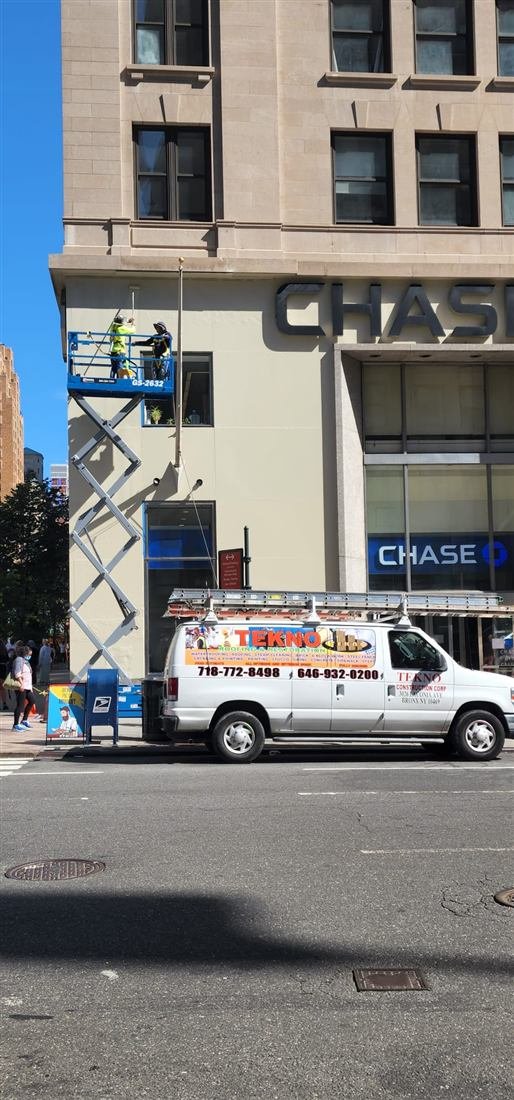
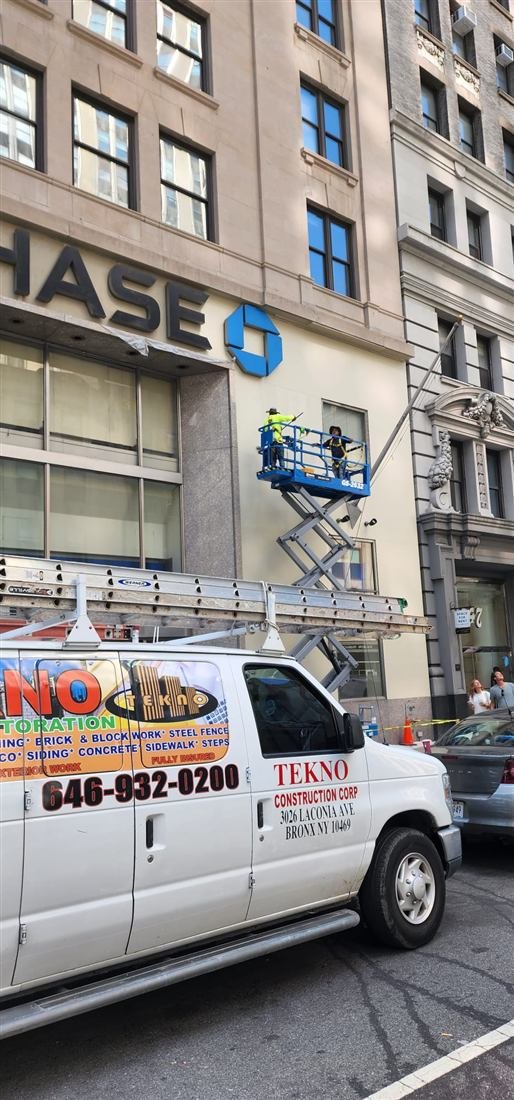
- Commercial-grade references where relevant — occupied storefronts and branches raise the bar on protection, phasing and hours. Our own commercial facade work includes a Chase bank branch, completed while the branch operated.
We're glad to be measured against every item on that list.
What determines LL11 facade repair cost
No two facades price the same, so we don't guess from a report PDF and we never publish one-size-fits-all rates. We visit the building free of charge, review the FISP report against the actual conditions, and hand you a fixed written quote — no obligation, and no revisions after the work starts.
Your price is determined by:
- The repair quantities — square footage of repointing, counts of brick replacement, lintels, copings and sealant joints called out in the report
- Access and protection — sidewalk shed footage and duration, pipe scaffold versus suspended rigging, and the height of the work
- Classification and timeline — planned SWARMP work sequences more efficiently than emergency unsafe-condition work
- Materials — matching existing brick, stone and mortar ranges from routine to specialty
- Filings and coordination — permits, city paperwork and the QEWI review cycle built into the schedule
We respond within 24 hours and can usually schedule the site visit the same week. Request your quote here.
Where we work
From our Yonkers headquarters we run facade crews across Manhattan, Brooklyn, Queens, the Bronx and Staten Island, plus Yonkers and the rest of Westchester County.
Frequently asked questions
What does an LL11 facade repair contractor actually do?
Everything after the inspection: installing the sidewalk shed or scaffold that protects the public, performing the masonry and facade repairs listed in the FISP report, coordinating probes and sign-offs with the QEWI, handling DOT/DOB permits, and supplying the documentation for the amended filing that lets the shed come down.
What is the difference between SWARMP and an unsafe classification?
SWARMP — Safe With a Repair and Maintenance Program — means the facade isn't a hazard today but has conditions that must be corrected before the next filing cycle. Unsafe means a condition threatens people or property: protection must go up immediately and repairs proceed on the city's timeline. SWARMP items left past their deadline are treated as unsafe.
Do LL11 repairs always require a sidewalk shed?
Unsafe conditions require immediate public protection, which usually means a sidewalk shed. Planned SWARMP work sometimes proceeds with lighter protection depending on the conditions and what the filings require. We install and maintain our own sheds and scaffolds, so protection is part of the quote rather than a separate vendor's schedule.
Who files the amended report after the repairs — the contractor or the QEWI?
The QEWI — the Qualified Exterior Wall Inspector who signed the original report — files the amended report with the Department of Buildings. The contractor's job is to make that filing possible: performing the repairs to the approved details, opening up work for the QEWI's review, and delivering the documentation the filing depends on.
How do I choose between local law 11 contractors?
Verify the license and insurance in writing, ask who handles permits and city paperwork, and request references from buildings they took from a SWARMP or unsafe filing through to an amended report. Then look for a fixed written scope tied to your report's line items. A contractor who handles shed, repairs and filings under one contract removes the handoffs where these projects typically stall.
How much do LL11 facade repairs cost in NYC?
It depends on the repair quantities in your report, the shed and scaffold the work requires and how long protection stays up, the classification driving the timeline, and the materials needed to match your facade — which is why we quote only after seeing the building. The on-site visit is free, the quote is fixed and in writing, and we respond within 24 hours.
Facade repair contractors who close the filing, not just the crack
15 years, 500+ projects
Fifteen years of masonry, restoration and facade work across the five boroughs, Yonkers and Westchester — over 500 completed projects, including commercial facades like an operating Chase bank branch.
Licensed & insured
A fully licensed and insured general contractor. Sheds and scaffolds erected under our own permits, DOT/DOB paperwork handled as part of the job, QEWI coordination built into the schedule.
24-hour response
Every call, form and WhatsApp message answered within 24 hours — and your free facade site visit usually scheduled the same week.
Turn your FISP report into a closed filing
Whether you're planning ahead on SWARMP items or staring down an unsafe condition, the first step is the same: we review the report at the building and put a fixed, honest price on the whole scope — shed, repairs and paperwork — in writing.
Prefer to talk? Call (718) 772-8498, reach Mr. Ali directly at (646) 932-0200, message us on WhatsApp, email info@teknoconstruction.com, or contact us here. You'll hear back within 24 hours.