
Retaining Wall Contractors in Westchester, Yonkers & NYC
A retaining wall that leans, bulges or weeps muddy water isn't a cosmetic problem — it's a structure holding back tons of saturated soil, and it fails on its own schedule, not yours. Tekno Construction builds and repairs block, stone and concrete retaining walls across Yonkers, Westchester County, the Bronx, Queens, Brooklyn and Manhattan — proper footings, real drainage behind the wall, and every permit and filing handled for you.
Free on-site wall assessment: (718) 772-8498 — or send photos of the lean, the bulge or the crack on WhatsApp and we'll tell you honestly whether you're looking at a repair or a rebuild. Every inquiry gets a response within 24 hours.
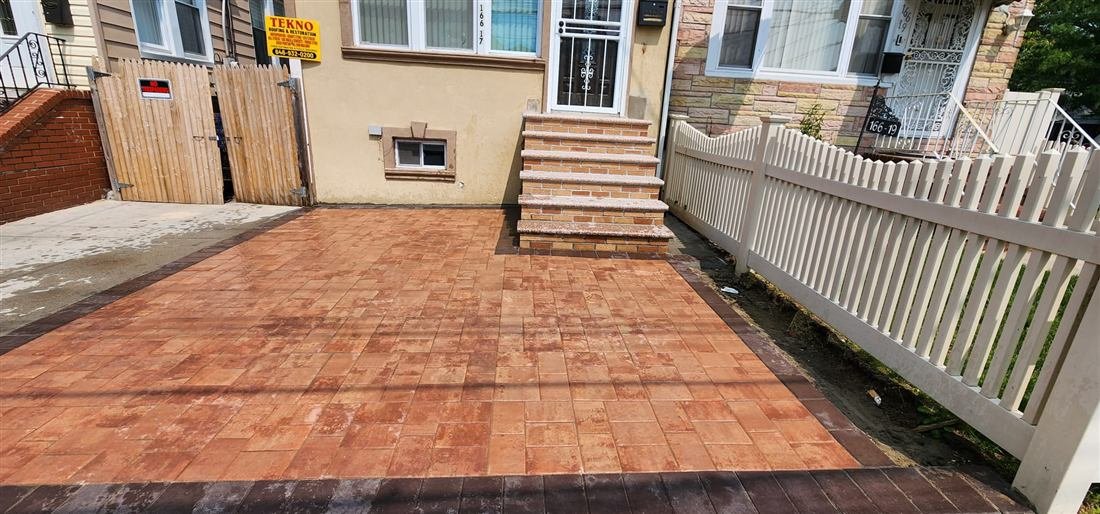
Why retaining walls fail
Almost every failed wall we're called to look at died the same death: water. Soil behind a retaining wall soaks up rain and snowmelt, and saturated soil pushes with enormous hydrostatic pressure. A wall built without drainage — no gravel backfill, no weep holes, no drain pipe — carries that entire load on its face. Add a Northeast freeze-thaw cycle that turns trapped water into expanding ice, and even a thick wall will eventually rotate, crack or burst. The wall was never the weak point; the ground behind it was.
The warning signs, roughly in order of urgency:
- Leaning or rotating — the wall is visibly out of plumb, tipping away from the slope it holds. Pressure is winning, and the movement only accelerates.
- Bulging mid-face — a belly in the middle of the wall means the face is deflecting under load. In block and stone walls this is often the last stage before sections let go.
- Horizontal or stair-step cracking — cracks running along the courses signal pressure from behind, not simple settling. In masonry walls they track the mortar joints in a staircase pattern.
- Soil washing through the face — mud staining, sinkholes or slumping ground above the wall mean backfill is escaping through open joints. The wall is losing the very soil that was compacted behind it.
- Water seeping through the face — moisture bleeding through the wall itself, instead of exiting cleanly at weep holes, tells you the drainage behind it is clogged or was never installed.
- Crumbling caps and spalled faces — freeze-thaw damage. Cosmetic at first, but every open surface lets in more water.
Caught early — seepage, minor cracking, a failing cap — many walls can be repaired and retrofitted with drainage. Caught late, a lean becomes a rebuild. Either way, the free assessment tells you which side of that line you're on.
Retaining wall types we build
We build new walls and replace failed ones in every material commonly used across Westchester and NYC, and we'll walk you through the honest trade-offs of each at the free on-site visit:
- CMU block retaining walls — reinforced concrete block on a poured footing, cores grouted solid, then finished with a stone, brick or stucco veneer to match the house. The workhorse of driveway walls, stoop returns and property-line grade changes, and a natural pairing with our masonry and brickwork crews.
- Poured concrete retaining walls — formed and poured with steel reinforcement on an engineered footing. The strongest option for tall walls, tight urban lots and walls that carry a driveway or structure above them.
- Natural stone retaining walls — fieldstone, granite and bluestone, dry-laid or mortared. The classic look on Westchester's older properties, and the one that most rewards a mason who actually knows how to bed and tie stone.
- Segmental / interlocking block walls — engineered retaining wall systems that stack and lock without mortar, reinforced with geogrid layers into the slope behind them. Fast to build, flexible under frost, and available in a wide range of finishes.
We also build the smaller structures around them: garden and landscape walls, tiered walls that break one tall grade change into planted steps, knee walls under new fence lines, and wall-and-fence combinations alongside our paving and fencing work — one crew, one mobilization, one matching finish.
Drainage done right — the part you never see
The visible wall is half the job. What decides whether it stands for decades is what we put behind it:
- Free-draining gravel backfill — clean crushed stone placed behind the wall instead of native soil, so water falls to the base instead of loading the face.
- Perforated drain pipe — collected at the footing and carried to daylight or a legal discharge point, so water leaves the wall instead of pooling behind it.
- Weep holes — clear outlets through the face at the base, kept open, so any water that does reach the wall exits under no pressure.
- Filter fabric — separating soil from stone so the gravel layer and pipe don't silt up and quietly stop working a few seasons in.
- Grading and surface water — the ground above the wall pitched so roof runoff and slope drainage are directed away, not funneled into the backfill.
If your wall sits against the house — a basement-level areaway, a driveway cut, a walk-out grade — the drainage detail also protects the building itself. That's the same discipline behind our waterproofing work: manage the water first, and the structure stops fighting for its life.
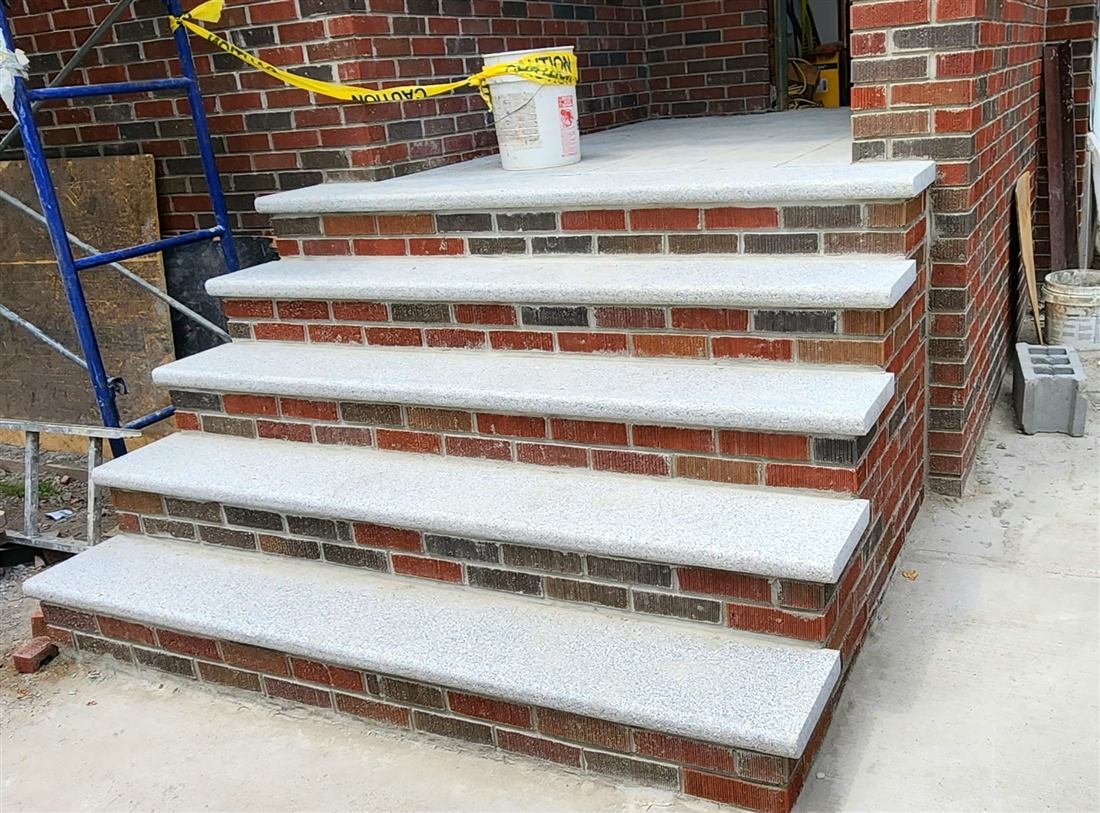
Retaining wall repair vs. rebuild
Not every troubled wall needs to come down. Depending on what the assessment finds, retaining wall repair can mean repointing open joints in a stone or block wall, rebuilding the top courses and caps, resetting displaced units, clearing or retrofitting weep holes and drainage, or rebuilding a failed section while the sound portions stay. What we won't do is patch a wall that's structurally done — if a wall is leaning or bulging past the point of honest repair, we'll tell you so, price the rebuild in writing, and take down the old wall as part of the same scope. You get a straight answer either way, before any money changes hands.
Permits, engineering and the paperwork
Retaining walls are structures, and the city treats them that way. In Yonkers and the Westchester municipalities, retaining wall work generally runs through the local building department, and taller walls typically require engineered drawings and permits before anyone digs. In the five boroughs, the NYC Department of Buildings has its own filing and inspection process, and walls near the property line, a sidewalk or a neighboring structure bring extra requirements with them.
We handle the whole process with the city — the permit applications, the coordination with the engineer where sealed drawings are required, the utility mark-outs before excavation, and the inspections through sign-off. It's part of every job, never a separate task left to you, and never a mystery line item on the quote.
What determines retaining wall cost
No two walls price the same, so we don't guess over the phone and we never publish one-size-fits-all rates. We visit your property free of charge, measure the actual wall and grade, and hand you a fixed written quote — no obligation, and no revisions after the work starts.
Your price is determined by:
- Height and length — taller walls carry exponentially more soil pressure, which means bigger footings, more reinforcement and often engineered drawings
- Material — segmental block, CMU with veneer, poured concrete and natural stone each carry different material and labor costs
- Site access — a machine-accessible front yard prices differently than a rear slope where everything moves by hand
- Drainage scope — gravel, pipe, fabric and discharge routing scale with the wall and the water the site collects
- Demolition of the old wall — tear-out, hauling and disposal of a failed wall before the new one goes up
- Permits and engineering — filings and sealed drawings where the height or location requires them
We respond within 24 hours and can usually schedule your visit the same week. Request your quote here.
Where we work
From our Yonkers headquarters we run wall crews across Yonkers, Westchester County, the Bronx, Queens, Brooklyn and Manhattan. Westchester's sloped lots and Yonkers' hillside streets are retaining wall country — and our yard sits right in the middle of them.
Frequently asked questions
Why is my retaining wall leaning or bulging?
Almost always water pressure. Saturated soil behind a wall with poor or clogged drainage pushes against the face, and freeze-thaw cycles multiply the force every winter. A lean means the wall is rotating under that load; a bulge means the face itself is deflecting. Both get worse on their own — the free assessment tells you whether it can be stabilized or needs rebuilding.
Can a retaining wall be repaired, or does it need to be rebuilt?
It depends on how far the movement has gone. Open joints, failing caps, clogged weep holes and isolated displaced sections can often be repaired and the drainage retrofitted. A wall that is significantly out of plumb or bulging under load is usually past honest repair, and we'll tell you so plainly and price the rebuild in writing. Either way you get a straight answer at the free on-site visit.
How much does a retaining wall cost in Westchester or NYC?
It depends on height and length, material choice, site access, the drainage the wall needs, demolition of any existing wall, and whether permits and engineered drawings are required — which is why we quote only after seeing the property. The on-site visit is free, the quote is fixed and in writing, and we respond within 24 hours.
Do I need a permit to build a retaining wall?
Often, yes. Retaining walls are structures, and Yonkers, the Westchester municipalities and the NYC Department of Buildings each have their own rules — taller walls typically require engineered drawings and permits, and walls near a property line or sidewalk bring extra requirements. We confirm exactly what applies to your property and handle all permits, filings and inspections as part of the job.
What is the best material for a retaining wall — block, stone or concrete?
Each has a place. Poured concrete is the strongest option for tall or heavily loaded walls. Reinforced CMU block with a veneer balances strength and appearance. Segmental interlocking block builds fast and flexes well under frost. Natural stone is the classic look on older properties. We walk through the trade-offs and price the options at the free visit so you can decide with real numbers.
How long does a properly built retaining wall last?
Decades. What kills walls early is never the material — it's missing drainage. A wall built on a proper footing with gravel backfill, filter fabric, drain pipe and working weep holes has nothing pushing it over, so it simply stands. That unseen work behind the wall is the difference between a 40-year wall and a 10-year wall.
Walls built by people who've seen how walls fail
15 years, 500+ projects
Fifteen years of block, stone and concrete across Yonkers, Westchester and New York City — over 500 completed projects, and a lot of failed walls replaced with ones that don't.
Licensed & insured
A fully licensed and insured general contractor. Permits filed under our license, engineers coordinated where drawings are required, inspections seen through to sign-off.
24-hour response
Every call, form and WhatsApp message answered within 24 hours — and your free on-site wall assessment usually scheduled the same week.
Get your wall assessed this week — free
Whether it's a leaning wall you've been watching for two winters or a new wall for a driveway cut or sloped yard, the first step is the same: we look at it, tell you honestly what it needs, and put a fixed price on it in writing.
Prefer to talk? Call (718) 772-8498, message us on WhatsApp, email info@teknoconstruction.com, or contact us here. You'll hear back within 24 hours.