
Roof Leak Repair in NYC — 24-Hour Emergency Response
Water coming through a ceiling doesn't wait, and we treat it that way — active leaks go to the front of our line. Tekno Construction handles emergency roof leak repair across the five boroughs, Yonkers and Westchester County — we find the actual source of the leak, stabilize the roof so the water stops, and put a fixed written price on the permanent repair. Licensed, insured, and answering every call within 24 hours.
Leaking now? Call (718) 772-8498 — or reach Mr. Jay directly at (914) 640-9185. Or send photos of the leak on WhatsApp and we'll tell you what we're seeing and how fast we can get there. Every call gets a response within 24 hours; active leaks go to the front of the line.
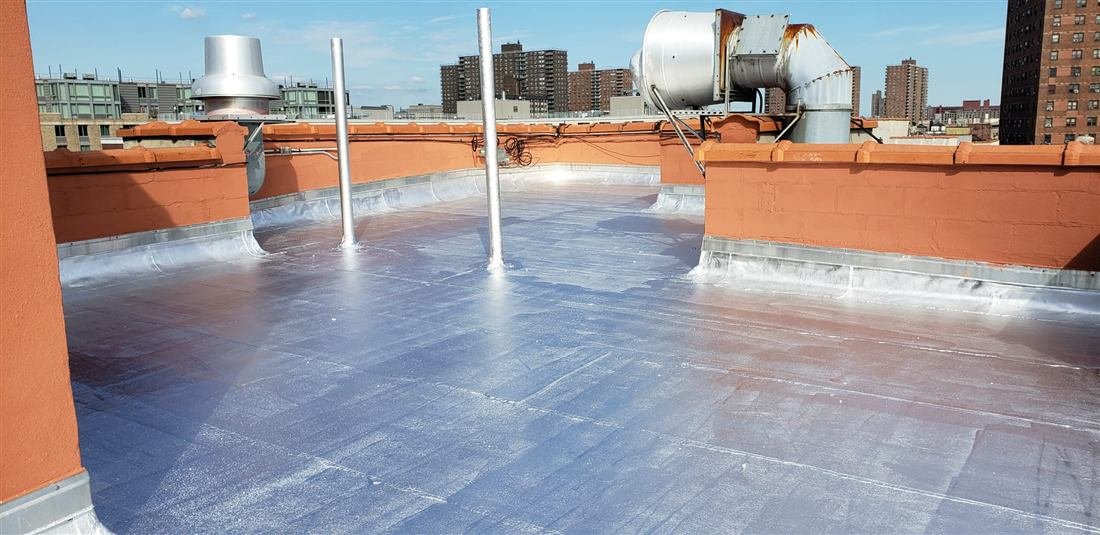
Leaking right now? Do this first
Before anyone gets on the roof, protect what's under it: move furniture and electronics out of the drip line, set out buckets, and if a ceiling is bulging with trapped water, relieve it with a small puncture at the low point so it drains in a controlled stream instead of collapsing. Photograph everything — it helps your insurance conversation and helps us trace the water. What we'd rather you not do is climb onto a wet roof with a bucket of tar: blind patches rarely land on the actual entry point, and the wrong material makes the proper repair harder.
Then call us — we'll ask where the water shows and when it started, and get eyes on it fast.
Where flat roofs actually leak
Most of New York's housing stock — row houses, walk-ups, mixed-use buildings, extensions — sits under a flat roof, and flat roof repair in NYC is its own discipline. In fifteen years of chasing leaks across this city, the water almost always gets in at one of a handful of places:
- Seams and laps — the joints where rolls of membrane meet. Adhesion fails, seams fishmouth open, and every rain feeds a slow drip.
- Penetrations — plumbing vents, drains, skylights, HVAC curbs. Every hole through the roof depends on flashing and sealant that ages faster than the membrane around it.
- Ponding water — low areas where water stands for days after a storm, degrading the membrane beneath and finding every pinhole and blister.
- Parapet walls and coping caps — open coping joints, cracked caps and failed counter-flashing let water into the top of the wall, where it travels down inside the masonry and appears as a "roof leak" along the ceiling line.
- Flashing at walls and edges — the terminations where the roof meets a parapet, a neighboring building or a bulkhead. Flashing is where roofs are won and lost.
- Drains and scuppers — clogged or badly flashed drains back water up over the flashing height, turning a maintenance issue into an interior flood.
Here's what makes roof leaks maddening: water enters at one point, runs along the deck, the insulation or a joist, and drips through the ceiling somewhere else entirely — sometimes twenty or thirty feet from the breach. That's why patching where the drip shows so often fails, and why we start every job with detection, not a bucket of cement.
Find it first: real roof leak detection
Our rule is simple: we don't repair anything until we can explain where the water is getting in and how it travels to where you see it. Roof leak detection at Tekno means walking the entire roof, not just the area above the stain — probing seams, checking every penetration and drain, examining parapet caps and flashing, and tracing the interior evidence back along the water's path. Where the assembly hides the answer, we open a small test area and confirm rather than guess.
A patch in the wrong place buys you two dry weeks and a worse ceiling; a repair at the true entry point ends the problem.
Stop it fast, fix it right
Emergency roof repair happens in two honest stages, and we're upfront about the difference:
- Temporary stabilization — the same-visit work that stops active water: emergency patching at the breach, sealing failed seams and flashings, clearing clogged drains and scuppers, and covering compromised sections so the next storm stays outside.
- Permanent repair — done in workable conditions with the right materials for your roof: seams re-bonded, penetrations re-flashed, deteriorated membrane sections cut out and rebuilt, parapet caps and counter-flashing restored, ponding corrected so water drains instead of standing. Scope and fixed price in writing before we start.
Some contractors sell the tarp and disappear; others insist nothing can be done without a full replacement. The honest answer is usually in between, and we put it on paper.
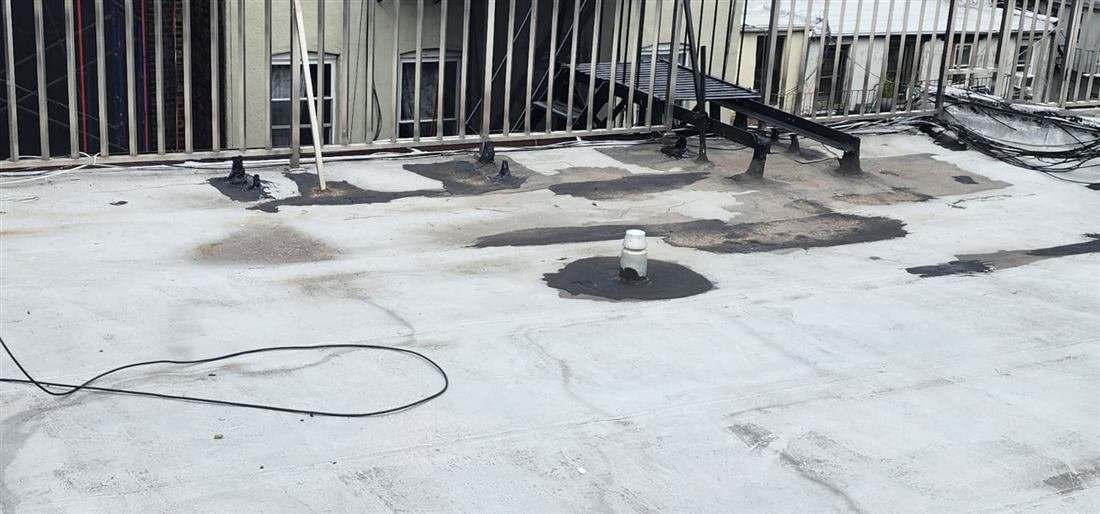
Repair, coat or replace — the straight answer
Once the leak is stopped, the question is what the roof needs next. Three honest paths, and the free assessment tells you which you're on:
- Repair — when the failure is local: a bad seam, a failed flashing, one deteriorated area on an otherwise sound membrane. Fix it properly and the roof goes back to work.
- Coat — when the membrane is aging across its whole surface but still sound underneath. A flat roof coating over prepared, repaired substrate seals the entire field, reflects heat, and adds years of service life for far less than replacement — but only over a roof that's dry and sound, which is why we repair first and coat second.
- Replace — when the membrane is saturated, blistered throughout, or has been patched so many times there's more patch than roof. At that point every repair is a down payment on the next leak, and honest money goes toward a new roof instead.
We'll tell you plainly which category your roof falls into — and if a repair will genuinely carry you a few more years, we'll say so.
Winter leaks and ice dams
Winter changes the physics. On pitched roofs, escaping heat melts snow high on the slope; the meltwater refreezes at the cold eaves into a dam of ice that backs water up under the shingles. On flat roofs, freeze-thaw cycles work open marginal seams and coping joints while frozen drains keep meltwater trapped on the roof for weeks. If your ceiling only leaks in winter — or during a thaw days after the snow fell — you're likely looking at ice damming or freeze-thaw damage, not a simple hole. We stabilize the leak, then correct the drainage, insulation-related and flashing conditions behind it. Where water has been running inside parapet masonry, we bring the same discipline as our waterproofing work: solve the water's path, not just the symptom.
How pricing works
No two leaks are alike, so we don't guess over the phone and we don't publish flat rates. We inspect the roof free of charge, show you what we found — photos included — and hand you a fixed written quote for the permanent repair. No open-ended day rates, no surprises after the work starts. Your price depends on the size and cause of the failure, roof type and access, how far the damage has spread, and whether parapet or drainage work is part of the fix. Where city filings or permits apply, we handle the paperwork as part of the job.
We respond within 24 hours, and active leaks are prioritized. Request your quote here or call (718) 772-8498.
Where we work
From our Yonkers headquarters we run roofing crews across all five boroughs, Yonkers and the rest of Westchester County. Flat-roofed row houses in the Bronx and Brooklyn and aging membranes on Westchester extensions are our most common emergency calls — and our yard sits within fast reach of all of them.
Frequently asked questions
How fast can you respond to a roof leak in NYC?
We answer every call, form and WhatsApp message within 24 hours, and active leaks go to the front of the line for the fastest possible visit. For emergencies, call the main line or reach Mr. Jay directly — sending photos or video on WhatsApp helps us assess the situation before we arrive.
Why is my ceiling leaking far from where the roof is damaged?
Because water travels. It enters at a seam, flashing or parapet, then runs along the deck, insulation or framing before dripping through the ceiling — sometimes twenty or thirty feet from the breach. That's why we trace the water to its true entry point before repairing anything.
Where do flat roofs usually leak?
At the details, not the middle of the field: membrane seams and laps, penetrations like vents, drains and HVAC curbs, ponding areas where water stands, parapet coping caps, and the flashing where the roof meets walls and edges. Clogged drains and scuppers are a common trigger too.
Can you stop a leak temporarily before doing the full repair?
Yes — that's often the right sequence. Same-visit stabilization stops the active water: emergency patching, sealing failed seams and flashings, clearing drains, and covering compromised areas. The permanent repair is then done in workable weather, under a fixed written quote you approve first.
Should I repair, coat or replace my flat roof?
It depends on the condition of the membrane. Local failures on a sound roof call for repair. A membrane aging across its whole surface but still sound underneath is often a candidate for a roof coating after repairs. A saturated, blistered or endlessly patched membrane is due for replacement. The free inspection tells you honestly which category your roof is in.
What causes roof leaks that only happen in winter?
Usually ice damming or freeze-thaw damage. On pitched roofs, melting snow refreezes at the cold eaves and backs water up under the shingles. On flat roofs, freeze-thaw cycles open marginal seams and coping joints while frozen drains trap meltwater on the roof. We stabilize the leak, then correct the drainage and flashing conditions behind it so it doesn't come back next winter.
Roofers who find the leak, not just the stain
15 years, 500+ projects
Fifteen years of roofing across Yonkers, Westchester and NYC — over 500 completed projects, and plenty of "unfindable" leaks traced and ended.
Licensed & insured
A fully licensed and insured general contractor. Where filings or permits apply, the paperwork runs under our license — never left to you.
24-hour response
Every call, form and WhatsApp message answered within 24 hours — and active leaks prioritized for the fastest possible on-site visit.
Stop the leak — starting today
Whether it's water dripping into a bucket right now or a stain that grows a little with every storm, the first step is the same: we get on the roof, find where the water is actually getting in, and put a fixed price on ending it — in writing.
Leaking now? Call (718) 772-8498 or Mr. Jay direct at (914) 640-9185, message us on WhatsApp, email info@teknoconstruction.com, or contact us here. You'll hear back within 24 hours — faster when water is coming in.