
Masonry Restoration in NYC, Yonkers & Westchester
Old masonry doesn't fail all at once — it fails one open joint, one crumbling brownstone sill at a time. Masonry restoration is the discipline of stopping that slow failure with the right materials instead of the fast wrong ones. Tekno Construction restores brick, brownstone, limestone and terra cotta across Yonkers, all five boroughs and Westchester County — matched mortar, honest repairs, and every permit and filing handled for you.
Free on-site masonry assessment: (718) 772-8498 — or send photos of the spalling, the open joints or the crumbling stone on WhatsApp and we'll tell you honestly whether it's restoration or replacement. Every inquiry gets a response within 24 hours.
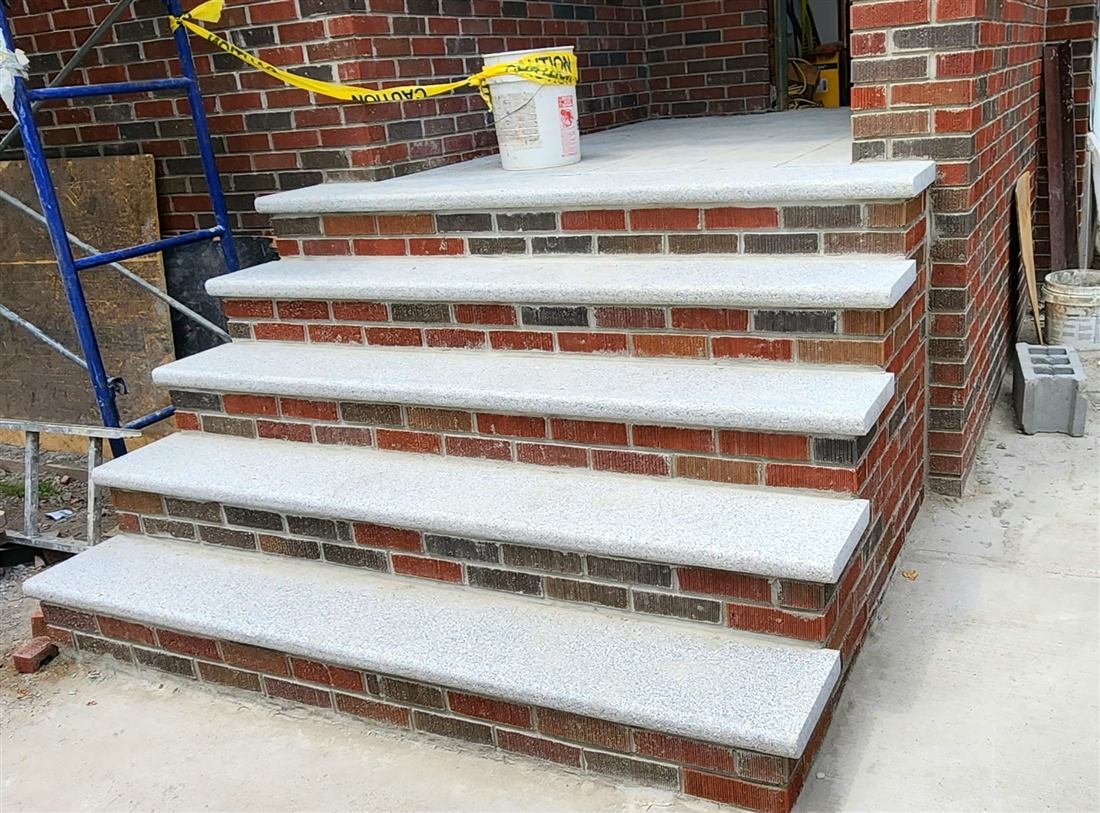
Restoration or replacement — why saving original masonry usually wins
The brick, stone and terra cotta on New York's older buildings is, in most cases, better material than anything that would replace it. Brick fired a century ago, brownstone from quarries long closed, terra cotta ornament no factory produces at scale anymore — tear it out and you don't get it back. You get an approximation, at a price that usually exceeds the honest repair.
That's the case for restoration masonry work over demolition: keep the original fabric where it's sound, repair it where it's failing, replace only what's truly gone. Done properly, a restored wall is the same wall, weathertight again, with decades left in it. Done improperly — hard cement smeared over soft brick, caulk where mortar should be — restoration becomes the thing that finishes the wall off. Our masonry and brickwork crews do both new construction and restoration, and the free assessment tells you plainly which repairs your building needs and which it doesn't.
Repointing done right: matching historic mortar
Most masonry restoration begins and ends with the joints, and this is where the trade divides into people who understand old walls and people who damage them. Buildings from the nineteenth and early twentieth centuries were laid in lime-based mortar — softer than the brick, slightly flexible, and breathable. That softness is a feature: the mortar takes the wall's movement and moisture, weathers sacrificially, and gets renewed every few generations by repointing.
Modern portland cement mortar reverses that relationship. It's harder and less permeable than historic brick, so the brick becomes the sacrificial element: moisture that once escaped through the joints is forced out through the brick faces, and within a few winters freeze-thaw spalls the faces off — permanent damage caused by the repair itself. It's one of the most common failures we're called to undo.
Repointing done right means:
- Raking joints to proper depth — deteriorated mortar cut back cleanly to sound material, not a shallow scratch coat
- Mortar matched to the wall — strength and permeability compatible with the existing masonry, lime-rich where the building calls for it
- Color, sand and texture matched — so repointed areas weather in with the original work instead of reading as a checkerboard
- Joint profiles reproduced — struck, grapevine, beaded or flush, tooled to match the original masons' work
On newer masonry a portland-based mortar is usually the correct match, and we use it there. The point is never lime for its own sake — it's the right mortar for the wall in front of us.
Brownstone, limestone and terra cotta repair
New York's facades were built in materials that each fail — and get repaired — in their own way:
- Brownstone — a soft sandstone, often laid with its bedding planes facing the weather, which is why stoops, sills and window surrounds delaminate in sheets. Sound repair means removing the failed material, patching with compatible restoration mortar built up in layers, and tooling the profile back to match — not troweling a cementitious skim coat over failing stone. See our dedicated brownstone restoration service for stoops, facades and full front resurfacing.
- Limestone — the sills, lintels, bands and cornice details on countless apartment houses and rowhouses. Limestone spalls, sugars at the surface, and cracks at embedded steel. Repairs range from composite patching to piecing in new stone — a dutchman — where a detail is beyond patching.
- Terra cotta — glazed, hollow, and often hiding the real problem: rusting steel anchors and lintels behind the units, cracking the ornament from inside. Restoration means opening the failed area, addressing the steel, and repairing or replacing units to match.
- Brick — repointing, rebuilding bulged sections, replacing spalled units, and rebuilding parapets and chimneys — the most weather-beaten masonry on any building. Brick restoration in NYC is as much about matching — size, color, texture — as laying; a rebuilt section should disappear into the wall around it.
Where the scope grows beyond masonry — steel lintels, copings, sealants, facade-wide work — it becomes an exterior restoration project, carried under one contract instead of three.
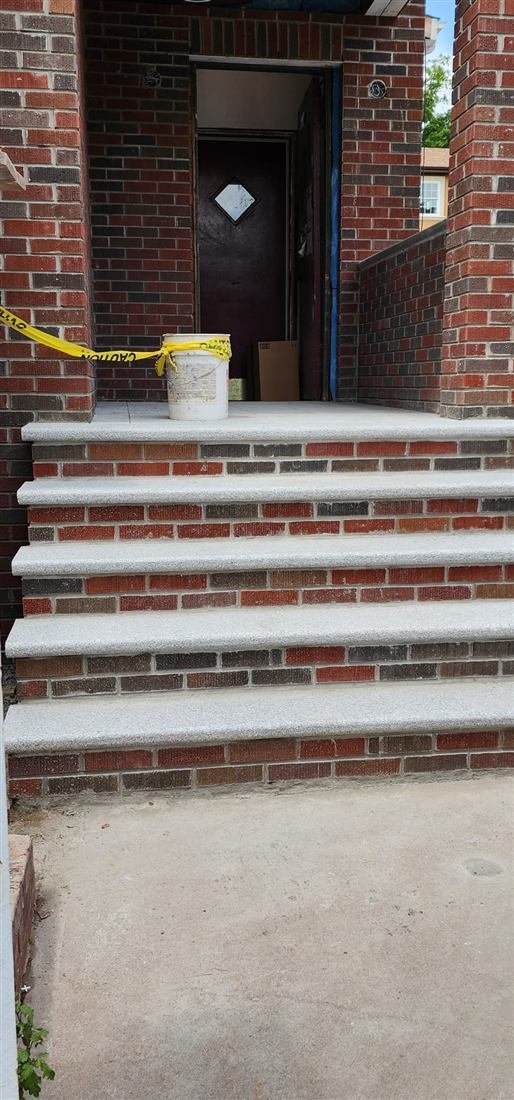
Freeze-thaw: how New York winters take masonry apart
Nearly every masonry failure we see traces back to the same mechanism. Water gets into the wall — through an open joint, a hairline crack, a failed coping — and freezes. Ice expands, and in a Northeast winter that cycle repeats dozens of times: freeze, thaw, soak deeper, freeze again — each cycle wedging the crack wider. Spalled brick, delaminating brownstone and hollow-sounding terra cotta are all the same story in different materials.
Which is why real masonry restoration runs in a fixed order: close the water's entry points first — repointing, crack repair, copings and sills — and only then consider a breathable water repellent as a second line of defense. Our brick waterproofing service exists for exactly that step. Sealing a wall that's still taking on water traps the moisture inside — and the next winter does its damage behind the sealer.
Landmarked buildings and the paperwork
If your building is a designated landmark or sits in a historic district, exterior masonry work generally needs approval from the city's landmarks authorities before it starts — and the approval process cares about exactly what good restoration cares about anyway: matched materials and original profiles. Elsewhere, facade repairs in the five boroughs routinely involve Department of Buildings filings, and work over the sidewalk brings DOT permits into the picture.
We handle the whole process with the city — the DOB and DOT paperwork, the coordination where landmarks approvals apply, and the inspections through sign-off. It's part of every job, never a separate task left to you, and never a mystery line item on the quote.
What determines masonry restoration cost
No two walls price the same, so we don't guess over the phone and we never publish one-size-fits-all rates. We visit your building free of charge, examine the masonry, and hand you a fixed written quote — no obligation, and no revisions after the work starts.
Your price is determined by:
- Extent of deterioration — spot repointing prices differently than facade-wide joint failure or rebuilt sections
- Material — brick, brownstone, limestone and terra cotta each carry different repair methods and labor
- Matching requirements — custom mortar matching and sourced replacement units
- Access — ground-level work prices differently than scaffold or rigging on upper floors
- Hidden conditions — rusted lintels and anchors behind the surface, priced honestly when found
- Permits and approvals — DOB and DOT filings, and landmarks coordination where it applies
We respond within 24 hours and can usually schedule your visit the same week. Request your quote here.
Where we work
From our Yonkers headquarters we run restoration crews across Yonkers, the Bronx, Manhattan, Brooklyn, Queens, Staten Island and Westchester County — brownstone rows, prewar apartment houses and brick rowhouses we've spent fifteen years learning to read. The same crews restore commercial fronts — our work includes a Chase bank branch facade.
Frequently asked questions
What is masonry restoration?
Masonry restoration is the repair of existing brick, stone and terra cotta using materials matched to the original construction — repointing deteriorated joints, patching or replacing spalled units, and rebuilding failed sections. The goal is to keep the original wall and return it to weathertight condition rather than demolish and rebuild.
Why does the mortar mix matter so much on older buildings?
Because historic walls were laid in soft, breathable lime-based mortar, and repointing them with hard modern portland cement reverses how the wall handles moisture: trapped water escapes through the brick faces instead of the joints, and freeze-thaw cycles spall the faces off. Correct repointing matches the mortar's strength, permeability, color and joint profile to the original work.
Can spalling brick or crumbling brownstone actually be repaired?
Usually, yes. Spalled brick can be cut out and replaced with matched units, and failed brownstone can be patched with compatible restoration mortar tooled to the original profile. What fails is the shortcut — skim coats and sealers over failing material trap moisture and accelerate the damage. The free assessment tells you what's repairable and what genuinely needs replacement.
Do I need landmarks approval for masonry restoration in NYC?
If the building is a designated landmark or sits in a historic district, exterior masonry work generally requires approval from the city's landmarks authorities before it begins. Elsewhere, facade work still routinely involves Department of Buildings filings, and sidewalk protection brings DOT permits. We confirm what applies to your building and handle the filings as part of the job.
How much does masonry restoration cost in NYC?
It depends on the extent of the deterioration, the material, the matching required, access, any hidden conditions like rusted lintels, and the permits involved — which is why we quote only after seeing the building. The on-site visit is free, the quote is fixed and in writing, and we respond within 24 hours.
Restoration by masons who know why old walls fail
15 years, 500+ projects
Fifteen years of brick, stone and restoration masonry across Yonkers, Westchester and New York City — over 500 completed projects, from stoops to commercial facades.
Licensed & insured
A fully licensed and insured general contractor. DOB and DOT filings, landmarks coordination and inspections seen through to sign-off — all part of the job.
24-hour response
Every call, form and WhatsApp message answered within 24 hours — and your free on-site masonry assessment usually scheduled the same week.
Get your masonry looked at this week — free
Whether it's open joints you've been watching spread, a stoop shedding its face, or a facade the winters have been working on, the first step is the same: we look at it, tell you honestly what it needs, and put a fixed price on it in writing.
Prefer to talk? Call (718) 772-8498, reach Mr. Jay directly at (914) 640-9185, message us on WhatsApp, email info@teknoconstruction.com, or contact us here. You'll hear back within 24 hours.