
Structural Repairs in NYC, Yonkers & Westchester
When brick cracks above your windows, when a wall starts to bow, when rust stains bleed through mortar joints — the steel and masonry carrying your facade are in trouble. Tekno Construction performs structural repairs across Yonkers, all five boroughs and Westchester County: lintel replacement, shelf angle repair, rebuilt load paths and bowing wall stabilization — built to the engineer's drawings, with shoring, permits and DOB filings handled for you.
Free on-site structural assessment: (718) 772-8498 — or send photos of the cracked brick or rust stains on WhatsApp and we'll tell you honestly what you're looking at. Every inquiry gets a response within 24 hours.
The hidden steel that holds up NYC's brick — and why it fails
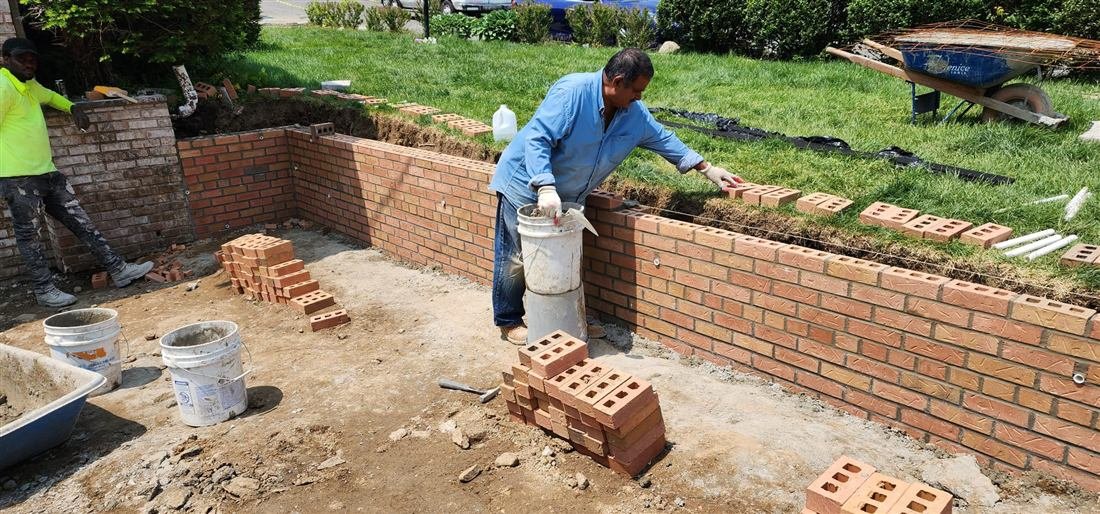
Most of New York's brick buildings stand on steel you never see. Over every window and door opening, a steel lintel carries the masonry above it. On larger buildings, horizontal shelf angles anchored to the structure carry each story of brick veneer. That steel was usually installed generations ago with little protection against water — and water always finds it.
When embedded steel rusts, it doesn't just weaken — it expands, jacking the masonry apart from within. Bricklayers call it rust jacking, and it's the classic NYC facade killer: the corroding lintel or shelf angle cracks the very brick it supports, open cracks let in more water, and the cycle accelerates every winter. Left alone, it ends with displaced brick and masonry that can fall to the sidewalk.
The warning signs are consistent from building to building:
- Horizontal cracks in the brick above windows and doors — the signature of a rusting, expanding lintel.
- Rust staining bleeding from mortar joints — the steel behind is corroding.
- A sagging brick course over an opening — the lintel is losing its capacity.
- Stair-step cracking at the corners of openings — the load path is redistributing.
- Horizontal cracking or bulging at floor lines — often the shelf angle in trouble.
- A wall that bows, leans or bellies — masonry going out of plane, which never corrects itself.
None of these get better on their own. Caught early, the fix is contained. Caught late, you're rebuilding whole sections of wall.
Lintel replacement in NYC
Lintel replacement is exacting work, and the sequence matters more than the steel. Our crews shore the masonry above the opening, remove the brick bearing on the failed lintel, cut out the corroded steel, and set the new lintel with proper bearing on each side. Then the brickwork goes back: matched brick, mortar and joint profile, with flashing and weep details so the new steel doesn't die the way the old one did. Done right, the repair disappears into the facade — the standard our masonry and brickwork crews hold whether it's one window lintel on a Yonkers two-family or a full elevation on a Bronx apartment building.
Shelf angle repair
Shelf angles are the harder, less-forgiving cousin of the lintel. Because a shelf angle carries an entire story of brick veneer, repairing one means removing brick courses at the floor line, shoring the veneer above, and either treating the existing steel or installing new angle sections anchored back to the structure — exactly as the engineer's drawings detail it. Just as important is what goes back in with the steel: through-wall flashing, weeps and tooled sealant joints, so water drains out instead of sitting on the new angle. Shelf angle deterioration is often first discovered during a facade inspection cycle — and we handle those repair scopes as a Local Law 11 facade repair contractor on buildings where FISP applies.
Cracked load paths and bowing walls
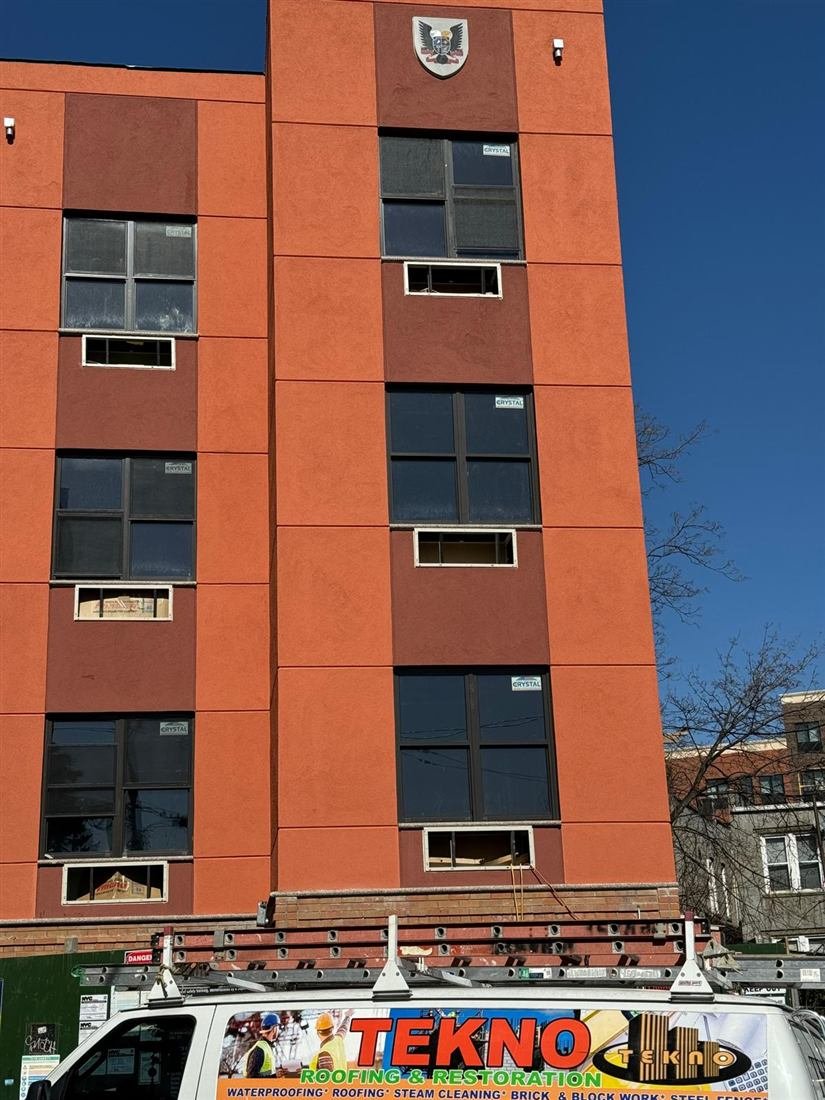
Not every structural problem starts with steel. Masonry buildings carry their weight down through defined load paths — and when settlement, water damage or a past renovation interrupts one, the wall shows it: widening cracks, crushed brick at bearing points, separation where walls meet. Bowing and bulging walls are the same story in profile: a wall pushed out of plane by rusted ties, freeze-thaw pressure or overloaded masonry no longer acts as one structure.
Our repair scopes here include rebuilding cracked and displaced masonry, re-anchoring veneer, installing wall ties and stabilization hardware per the engineer's design, repointing open joints, and rebuilding crushed bearing points. Where the movement traces back to the ground, the same discipline extends to our retaining wall work. And once the structure is sound, our exterior restoration crews bring the facade back to matching, finished condition — one contractor from shoring to final pointing.
Engineers, DOB filings and shoring — how structural work actually gets done
Structural repairs are not a judgment-call trade. Here's how a structural job runs with Tekno:
- Free on-site assessment — we examine the cracking, staining and movement, and tell you honestly whether you're looking at maintenance-level repair or a structural scope.
- Engineering where it's required — structural work in New York typically requires a licensed engineer's sealed drawings. If you have an engineer, we work from their documents; if you don't, we coordinate the engagement — and then we build exactly to the engineer's drawings. We don't improvise structural details.
- Fixed written quote — the scope, the shoring, the restoration and the timeline in one written price. No day rates, no revisions after the work starts.
- Permits and filings handled — DOB filings in the five boroughs, local permits in Yonkers and Westchester, and DOT permits where the sidewalk or street is involved. You make one call; we do the paperwork.
- Shoring before demolition — the loads above every repair area are supported before a single brick comes out, and stay supported until the new steel and masonry carry them again.
- Repair, restore, sign off — steel set, masonry rebuilt and flashed, joints pointed, inspections seen through to sign-off, with photo documentation of what went in behind the wall.
What determines structural repair cost
No two structural repairs price the same, so we don't guess over the phone and we never publish one-size-fits-all rates. We visit your building free of charge, examine the actual condition, and hand you a fixed written quote — no obligation, and no revisions after the work starts.
Your price is determined by:
- Extent of the deterioration — one rusted lintel prices very differently than a shelf angle across a full elevation
- Access and protection — ground-floor openings versus scaffold or sidewalk shed on a taller facade
- Shoring requirements — how much load must be supported, and for how long
- Masonry restoration scope — how much brick comes out and goes back, and the matching the facade demands
- Engineering and filings — sealed drawings, permits and inspections where required
We respond within 24 hours and can usually schedule your visit the same week. Request your quote here.
Where we work
From our Yonkers headquarters we run structural repair crews across Yonkers, the Bronx, Manhattan, Brooklyn, Queens, Staten Island and Westchester County. The work spans homes, walk-ups, apartment buildings and commercial storefronts — including facade work on a Chase bank branch — in exactly the pre-war brick neighborhoods where lintels and shelf angles are failing today.
Frequently asked questions
What is a lintel and why does it need replacement?
A lintel is the steel member over a window or door opening that carries the masonry above it. Most older lintels have little protection against water, and when they rust, the expanding rust jacks the brick apart — cracking the facade. Once a lintel is actively rusting and cracking the wall, replacement is the lasting fix; paint and patching only hide the progression.
What is a shelf angle, and how is it different from a lintel?
A lintel carries the masonry over a single opening. A shelf angle is a horizontal steel angle anchored to the building's structure that carries an entire story of brick veneer, usually at each floor line. When one corrodes, the damage shows as horizontal cracking or bulging along the floor line rather than over one window — and the repair means removing brick along that line, restoring or replacing the steel, and rebuilding with proper flashing and weeps.
What are the signs of a failing lintel or shelf angle?
The most common: horizontal cracks in the brick above windows or doors, rust stains bleeding through mortar joints, a sagging brick course over an opening, stair-step cracking at the corners of openings, and horizontal cracking or bulging at floor lines. The free on-site assessment tells you how far the deterioration has gone.
Do structural repairs require an engineer?
Typically, yes — structural work in New York generally requires a licensed engineer's sealed drawings. If you already have an engineer, we work from their documents; if you don't, we coordinate the engagement. Either way, we build exactly to the engineer's drawings — we don't design structural details ourselves.
Will the building need shoring during the repair?
Whenever load-carrying masonry is removed, the load above it must be supported first — so most lintel, shelf angle and rebuilding scopes involve temporary shoring. It's installed before demolition begins and stays until the new steel and masonry carry the load again. Over a sidewalk, pedestrian protection is part of the same plan.
How much does lintel replacement cost in NYC?
It depends on how many lintels are affected, how far the rust jacking has spread into the surrounding brick, the access and shoring required, and whether engineering and filings apply — which is why we quote only after seeing the building. The visit is free, the quote is fixed and in writing, and we respond within 24 hours.
Structural work by people who respect what the wall is carrying
15 years, 500+ projects
Fifteen years of masonry and structural work across Yonkers, Westchester and New York City — over 500 completed projects, from single lintels to full facade repair scopes.
Licensed & insured
A fully licensed and insured general contractor. We coordinate the engineer, build to the sealed drawings, file the DOB and DOT paperwork, and see every inspection through to sign-off.
24-hour response
Every call, form and WhatsApp message answered within 24 hours — and your free on-site structural assessment usually scheduled the same week.
Get the cracks looked at this week — free
Whether it's rust stains you've been watching spread, cracked brick above a window, or a scope your engineer has already drawn up, the first step is the same: we look at it, tell you honestly what it needs, and put a fixed price on it in writing.
Prefer to talk? Call (718) 772-8498, reach Mr. Ali at (646) 932-0200 or Mr. Jay directly at (914) 640-9185, message us on WhatsApp, email info@teknoconstruction.com, or contact us here. You'll hear back within 24 hours.